

Introduction: How Loan Repayment Shapes Your Financial Future
In India, taking a loan has become very common—whether it’s for a home, business, education, or personal needs. But what most people don’t realize is this:
Your credit score is not built when you take a loan—it is built when you repay it.
Many individuals face:
- Loan rejections
- Low CIBIL score
- High interest rates
- Difficulty getting credit approvals
The root cause is often poor loan repayment behavior.
In this detailed guide, you will learn how loan repayment impacts your credit score and how you can use it as a powerful tool to improve your financial profile.
Featured Snippet: Quick Answer
Impact of loan repayment on credit score:
- Timely EMI payments → Improves credit score
- Late payments → Reduces score
- Loan default → Severe negative impact
- Loan settlement → Long-term damage
Conclusion: Consistent and disciplined repayment is the key to a strong credit score.
What is a Credit Score and Why Repayment Matters
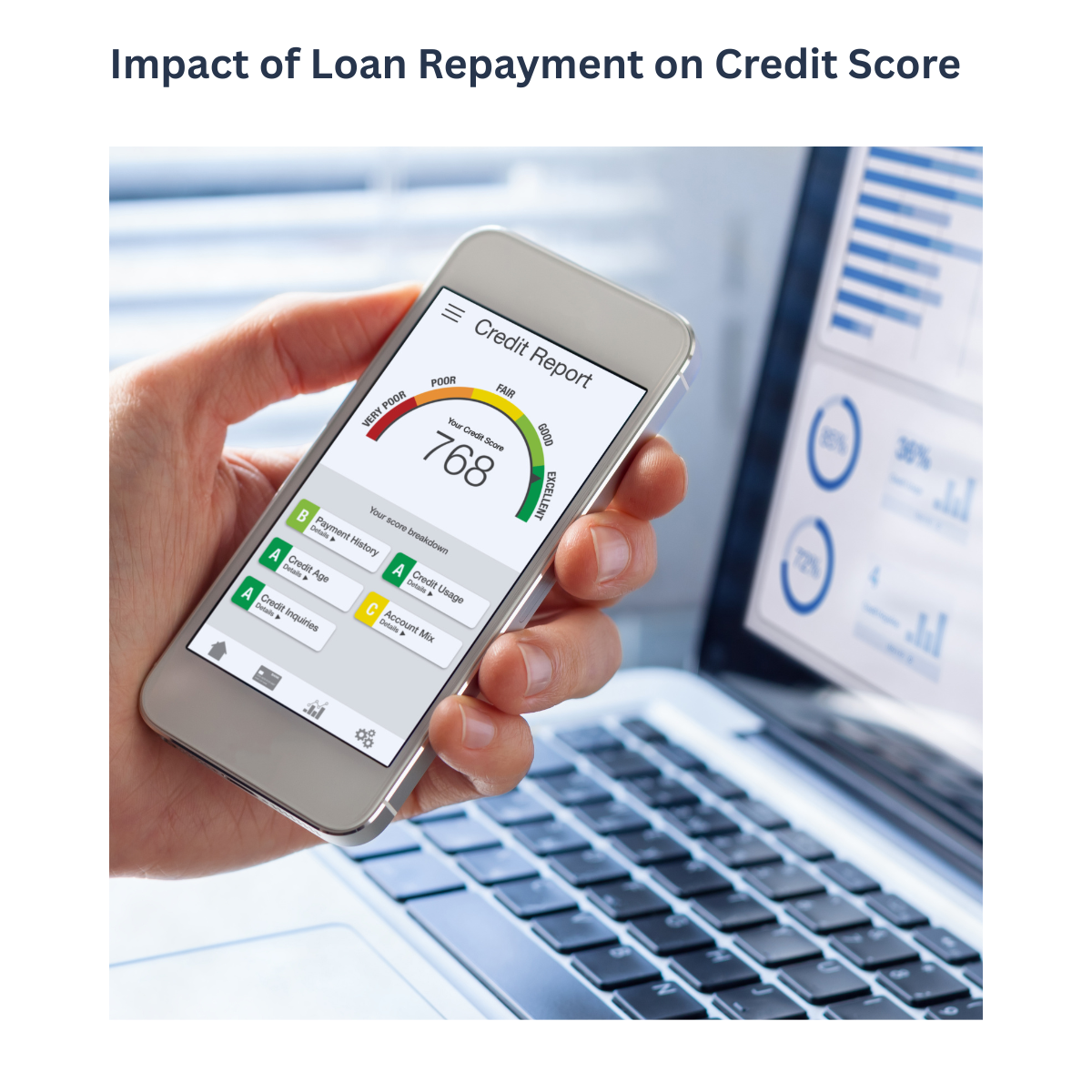
A credit score is a 3-digit number ranging from 300 to 900 that represents your creditworthiness.
- 750+ = Excellent
- 650–750 = Average
- Below 650 = Risky
Lenders use this score to evaluate:
- Your repayment behavior
- Your financial discipline
- Your risk level as a borrower
Loan repayment is the most important factor affecting this score.
How Loan Repayment Impacts Your Credit Score
1. Payment History (Highest Weightage)
- Paying EMIs on time → Positive impact
- Delayed payments → Negative impact
- Missed payments → Strong negative impact
Payment history carries the highest influence on your credit score.
2. Repayment Consistency
Regular and timely payments:
- Build trust with lenders
- Improve score stability over time
3. Loan Closure Status
- Properly closed loan → Positive
- Settled loan → Negative remark
Settlement signals financial difficulty and affects your score.
4. Credit Mix Improvement
Repaying different types of loans (secured + unsecured):
- Strengthens your credit profile
- Improves your overall score
Main Reasons Loan Repayment Hurts Your Credit Score
If your score is dropping, these could be the reasons:
- Late EMI payments
- Missing multiple EMIs
- Loan defaults
- Loan settlement instead of full repayment
- Poor financial planning
- Managing too many loans at once
- Auto-debit failures
Step-by-Step Guide to Improve Credit Score Through Loan Repayment
Step 1: Always Pay EMIs on Time
This is the golden rule.
- Never miss due dates
- Set auto-debit instructions
- Use reminders
Step 2: Borrow Within Your Capacity
Before taking a loan:
- Ensure EMI does not exceed 30–40% of your income
- Avoid over-borrowing
Step 3: Build an Emergency Fund
Unexpected situations can happen:
- Job loss
- Medical emergencies
Having a backup fund ensures you never miss EMIs.
Step 4: Avoid Loan Settlement
Settlement may seem easy but:
- It damages your credit score
- It creates a negative remark
Always aim for full repayment.
Step 5: Manage Multiple Loans Carefully
- Do not take too many loans at once
- Track all EMIs properly
- Prioritize high-interest loans
Step 6: Take Proper Loan Closure Proof
After repayment:
- Collect NOC (No Objection Certificate)
- Verify “Closed” status in your credit report
Step 7: Monitor Your Credit Report Regularly
Every 2–3 months:
- Check for errors
- Verify loan status
- Identify unknown accounts
Real-Life Example
Rocky , a small business owner from Assam, had:
- Credit score: 590
- Multiple delayed EMIs
- One settled loan
What he did:
- Started paying EMIs on time
- Cleared pending dues fully
- Avoided new loans
Result: His score improved from 590 to 720 within 6 months
Common Mistakes to Avoid
- Missing EMI deadlines
- Choosing loan settlement
- Taking excessive loans
- Ignoring auto-debit failures
- Not checking credit reports
- Lack of financial planning
Expert Tips (Pro Insights)
Tip 1: Maintain an EMI Calendar
Track all due dates using apps or reminders
Tip 2: Balance Income and Debt
Keep EMI obligations manageable
Tip 3: Use Prepayment Smartly
Pay extra when you have surplus funds
Tip 4: Maintain Bank Balance
Ensure sufficient funds for auto-debit
Tip 5: Stay Consistent
Consistency is the key to long-term improvement
Conclusion: Repayment Discipline Builds Your Credit Score
Taking a loan is easy, but repaying it responsibly defines your financial future.
If you:
- Pay EMIs on time
- Plan your finances wisely
- Avoid defaults and settlements
Then your credit score will steadily improve.
A strong repayment history leads to strong financial credibility.
FAQs (Frequently Asked Questions)
1. Does a late EMI affect credit score?
Yes, even one late payment can reduce your score.
2. Is loan settlement bad for credit score?
Yes, it negatively impacts your credit profile.
3. How long does it take to improve credit score?
Usually 3 to 6 months with proper repayment behavior.
4. Does early loan closure help?
Yes, but maintaining a long credit history is also important.
5. Can multiple loans affect credit score?
Yes, too many loans can increase risk and lower your score.
🚀 Strong Call-To-Action
If your CIBIL score is low, your credit report has errors, or your loan applications are getting rejected — there is no need to worry.
CrediBoost Solutions Pvt. Ltd. helps you professionally analyze and improve your credit profile.
Get your free consultation today and take control of your financial future.
📞 Call/WhatsApp: 8099690448 / 7086962101
🌐 Website: crediboost.in
Contact Number – 8099690448 / 7086962101
Address – C O Sri Nagendra Borma Hatilong Near Maruti Suzuki Arena North Lakhimpur Assam 787031
Email – support@crediboost.in
CIN NUMBER – U66190AS2025PTC027785