
Introduction: Is Your Loan Getting Rejected?
In today’s financial world, whether you apply for a personal loan, home loan, or credit card, the first thing banks check is your CIBIL score.
Many people face this situation:
- All documents are correct
- Income is stable
- Still, the loan gets rejected
👉 The main reason? Low CIBIL Score
If you don’t understand how your CIBIL score works, you may keep facing rejections without knowing why.
In this detailed guide, you will learn:
- What a CIBIL score is
- How it works
- Why it drops
- How to improve it step-by-step
Featured Snippet (Quick Answer)
What is a CIBIL Score?
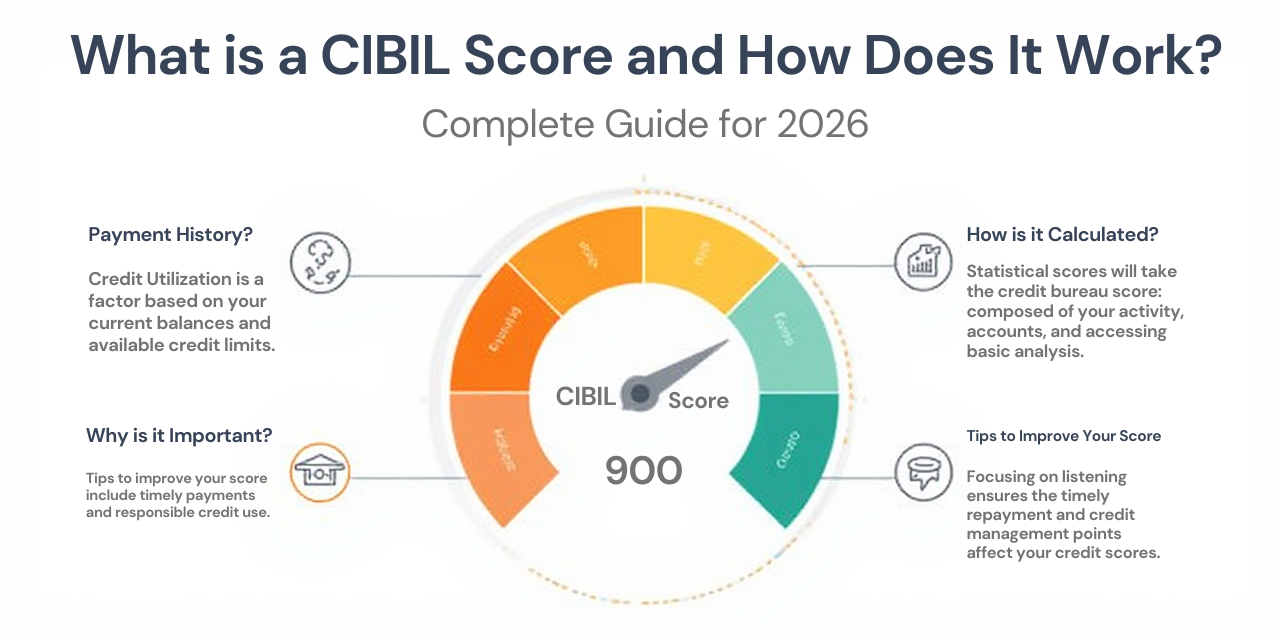
A CIBIL score is a 3-digit number (ranging from 300 to 900) that represents your creditworthiness. It shows how responsibly you manage loans and credit cards.
Ideal CIBIL Score Range:
- 750+ = Excellent
- 650–750 = Average
- Below 650 = Risky
What is a CIBIL Score? (Simple Explanation)
A CIBIL score is a numerical summary of your financial behavior. It is calculated by TransUnion CIBIL, based on your credit history.
It reflects:
- Your loan repayment habits
- Credit card usage
- Past defaults or delays
👉 In simple words:
Your CIBIL score = Your financial reputation
The higher your score, the higher your chances of loan approval.
How Does a CIBIL Score Work?
Your CIBIL score is calculated using five major factors:
1. Payment History (35%)
- Do you pay EMIs and credit card bills on time?
- Late payments or defaults significantly reduce your score
2. Credit Utilization (30%)
- How much of your credit limit you are using
- Ideal usage: Below 30%
3. Length of Credit History (15%)
- How old your credit accounts are
- Longer history = Better score
4. Credit Mix (10%)
- Combination of secured (home loan) and unsecured loans (personal loan)
5. Credit Enquiries (10%)
- Frequent loan applications lower your score
Main Reasons for a Low CIBIL Score
If your score is low, these are the most common reasons:
- ❌ Late EMI or credit card payments
- ❌ Loan defaults or settlements
- ❌ High credit card utilization (80–90%)
- ❌ Multiple loan applications in a short time
- ❌ Written-off or overdue accounts
- ❌ Errors in your credit report
👉 Real-Life Example:
Rahul applied for three loans within one month. All were rejected, and each application reduced his score further.
How to Improve Your CIBIL Score (Step-by-Step Guide)
Step 1: Check Your Credit Report
- Identify errors or incorrect entries
- Review all accounts carefully
Step 2: Pay All Dues on Time
- Never miss EMI or credit card payments
- Enable auto-debit for safety
Step 3: Maintain Low Credit Utilization
- Use less than 30% of your credit limit
- Example: ₹1,00,000 limit → Use up to ₹30,000
Step 4: Keep Old Accounts Active
- Older accounts strengthen your credit history
Step 5: Avoid Multiple Loan Applications
- Too many enquiries hurt your score
Step 6: Use Secured Credit
- Try FD-based credit cards or small secured loans
Common Mistakes to Avoid
🚫 Paying only the minimum due
🚫 Maxing out credit cards
🚫 Settling loans instead of closing them
🚫 Missing EMI payments
🚫 Ignoring your credit report
👉 These mistakes slowly damage your score over time.
Expert Tips (Pro Insights)
✔ Enable auto-pay for all EMIs
✔ Maintain a healthy credit mix
✔ Check your credit report every 3 months
✔ Take small loans and repay on time
✔ Be cautious with joint loans
👉 Pro Tip:
If your score is already very low, fixing it yourself can be difficult. Professional guidance can speed up the process.
Real-Life Example
Amit had a CIBIL score of 580 due to:
- High credit card usage
- Late EMI payments
- Loan settlement
After taking corrective steps:
- Reduced credit usage
- Paid dues on time
- Fixed report errors
👉 His score improved to 720 within 6 months.
FAQs (Frequently Asked Questions)
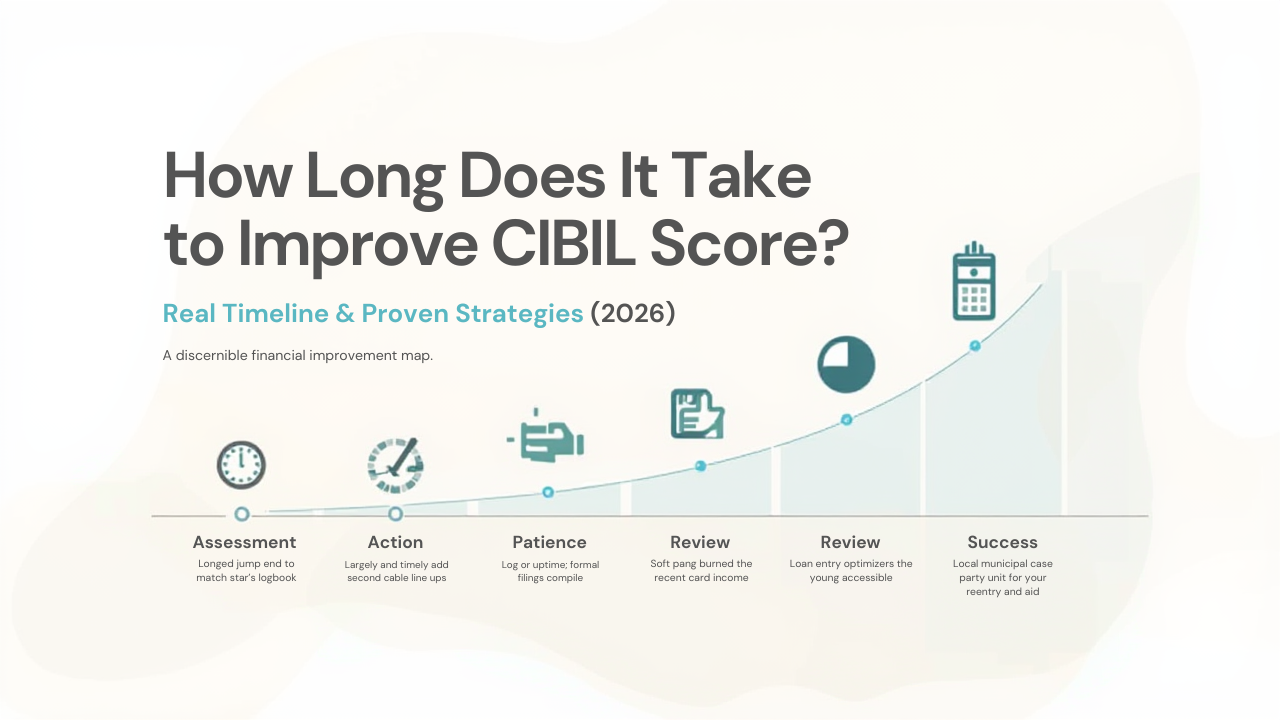
1. How long does it take to improve a CIBIL score?
Usually 3–6 months if you follow the right steps consistently.
2. Does loan settlement improve the score?
No. Settlement negatively impacts your credit profile.
3. What is the minimum score required for a loan?
Generally, 750+ is considered safe.
4. Can I have a CIBIL score without credit history?
No. You will fall under “No Credit History.”
5. Is checking my CIBIL score multiple times harmful?
No, self-checks are considered soft enquiries and do not affect your score.
Conclusion: Your CIBIL Score is Your Financial Power
Your CIBIL score is not just a number—it determines:
- Whether you get a loan or not
- The interest rate you receive
- Your financial credibility
If you manage your credit wisely, you can:
- Get loans easily
- Enjoy lower interest rates
- Build a strong financial future
🚀 Call To Action (Take Action Now)
If your CIBIL score is low, your report has incorrect entries, or your loan is getting rejected, there’s no need to worry. CrediBoost Solutions Pvt. Ltd. helps you professionally analyze and improve your credit profile.
👉 Get your free consultation today and take control of your CIBIL score.
📞 Call/WhatsApp: 8099690448 / 7086962101
🌐 Website: crediboost.in
CIN Number – U66190AS2025PTC027785
Leave a Reply